My Pumping Journey:
I started hand expressing colostrum about a week before having my baby. I did this to try to induce labor and so I could have some colostrum to take to the hospital. I think this helped start my supply. These Haakaa colostrum collectors make it easy to collect and take to the hospital. After having my baby, I tried to latch him in hopes to breastfeed. The latching did not come naturally for us, so the hospital provided me with a pump during my stay. Every time he was hungry, I would feed him the colostrum I brought while I pumped. Pumping so often and so early on I believe made a difference in my supply given that breastfeeding is all about supply and demand. I then became an “over supplier” as we call it in the pumping world. I averaged about 40-50oz a day at the beginning and then soon went up to 60-70oz a day. Once my baby started to sleep through the night, I would set an alarm at night to pump in order to maintain at least 5 pumps a day. About 5 months postpartum, I stopped my MOTN (middle of the night) pump, but this did slightly decrease my supply. If you’re struggling keeping your supply up, I would suggest continuing your MOTN pump.
I type this all out, so you know every mom’s experience with pumping is different. What works for me, may not work for others. What works for an over supplier, may not work for someone who doesn’t have an over supply. Especially if you’re nursing, your body may make exactly what your baby needs and nothing more.
Pumping can be so frustrating. Missing out because you’re pumping, spilling milk, keeping the milk cold, etc. It comes with a huge reward of providing for your baby, but if it’s severely affecting your mood, it’s always okay to stop. Joining a pumping community on Facebook can help relate to other mothers as well. I hope you find some comfort in this post and advice that may help you.
Insurance
You’ll want to get onto the AeroFlow website and type in your insurance information. They will then reach out to your doctor to sign off on a prescription for a breast pump. The website will walk you through what each pump will cost with your insurance. Aeroflow will also text you once a month to see if you are still pumping and in need of new supplies and bags. All you have to do is reply “Yes,” and they’ll be delivered to your door!
Updating Pump Parts
It’s important to continue to buy new parts for your pump as they get used. For example, I use the Eufy S1 pump, and I usually buy new valves and diaphragms once every month or two. When it starts to take you longer to pump or the suction isn’t as good as it once was, that may be a sign it’s time for new parts!
Flange Size
This one is talked about a lot at the beginning of your pumping journey. What size flange should I get? Some pumps may come with a measuring device, but I would suggest reaching out the lactation consultant at the hospital, and they can fit you for this. The flange is the part of the pump that fits directly over the nipple and creates a seal. Having the correct size of flange is crucial to make the most of your pumping. You can also buy different flanges for your pump such as this one my legendary milk.
Nutrition While Pumping
In order to produce milk, you have to provide your body with nutrients. If you are trying to increase your supply, I would suggest eating more and drinking more water. Carbs and protein are what’s going to help produce the most milk. You’ll find a lot of information about Dr. Pepper, Oreos, etc. to help boost your supply. I suggest trying to eat healthier carbs because that’s going to help you out in the long run!
Fridge hack
What is the “fridge hack?” This is when instead of washing your pumps in between each use, you put the pumps in the fridge instead. I use this hack throughout the day and then wash/sterilize my pumps at night. The theory behind the fridge hack is that if the pumps are in the fridge, bacteria cannot grow. There’s controversy behind whether or not you should rinse your pumps before placing in the fridge. I, personally, try to get us much milk out of the pumps as possible then place them in a ziplock bag (without rinsing) and then place in the fridge.
How To Start
If your plan is to be an EP (exclusive pumper) then I would suggest starting to pump the day your baby is born. You want to teach your body that the baby has been born, and it’s time to make some milk! I started out pumping every time my baby would eat (so every 2-3 hours). This was exhausting that first 6 weeks or so, but it eventually gets better. I then went to every 3-4 hours and around 2.5 months would stretch some of my pumps out to every 5 hours. If you don’t want your supply to drop, I would suggest setting an alarm at night to get up and pump for the first few months. Around 5 months, I started going 6-7 hours over night without pumping.
See my blog post My Realistic Pumping Schedule to see my month by month pumping schedule to help maintain your supply
Charting
You don’t have to keep track of what you pump, but it is helpful and fun to look back on. Huckleberry is an app you can use to chart everything including bottles, pumping, solids ate, diaper changes, etc. There are other great apps as well that help you keep track of how much milk you have frozen and in the fridge. I would suggest finding an app that works for you and stick with it!
How to Get Bubbles Out of Bag
You want to try to get as many bubbles out of your bag as possible before freezing it to avoid freezer burn. I’ve found the best way to get these bubbles out is to seal the middle of the bag then push the bag against your body while slowly pushing the milk up to the top of the bag. Once it reaches the top it will stop at the middle where it’s sealed and go out and around. Once it looks like there’s no air in the bag, you can seal the sides.
How to Freeze Your Milk
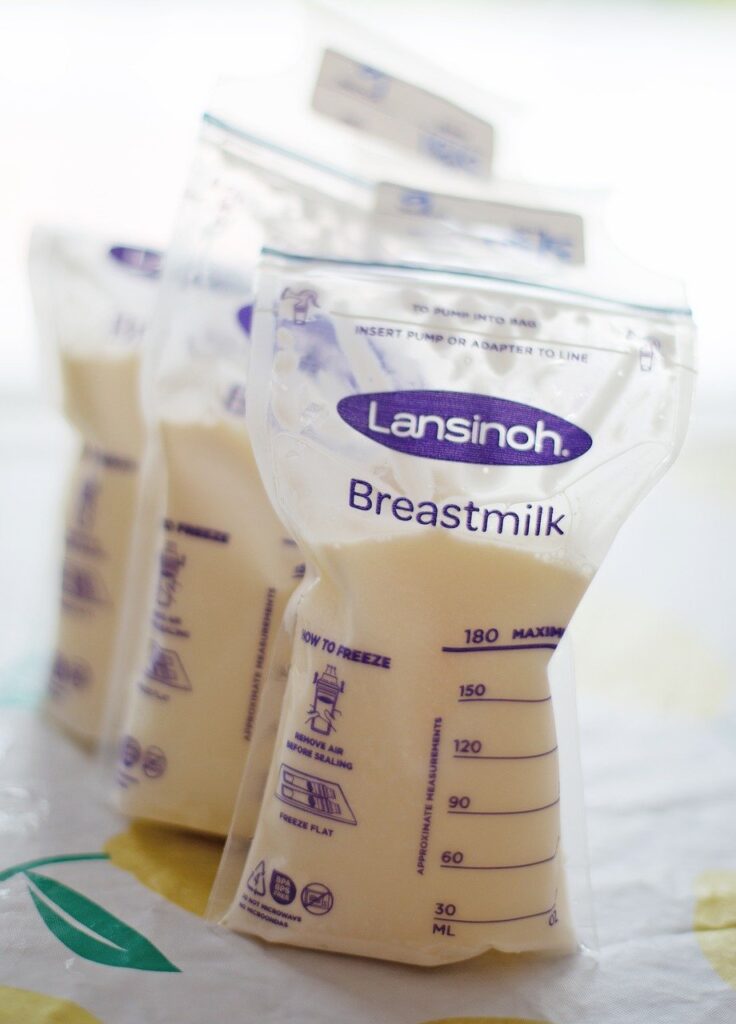
If you don’t have enough milk to freeze, that’s perfectly okay! But if you do, there are some ways to do it to make it more convenient for you. I freeze all of my milk in 4oz bags. I’ve found freezing more than 4oz prevents the bags from freezing flat. I then stack the bags on top of each other in the freezer until I have enough to fill a gallon ziplock bag. You can stack each milk bag in the gallon bag and this creates what we call in the pumping world a “brick.” Then you can continue to fill your freezer with these “bricks.” You want to make sure you’re labeling each bag with the date and how many ounces and then you can label each brick with the dates and ounces as well.
These posts may contain affiliate links. That means I may make a small commission on items purchased through links in these posts at no extra cost to you!